Recovery with a destination.
The online check-in helps make the next choice smaller. The Dublin programme adds people, structure and a place to work on what comes after that choice.
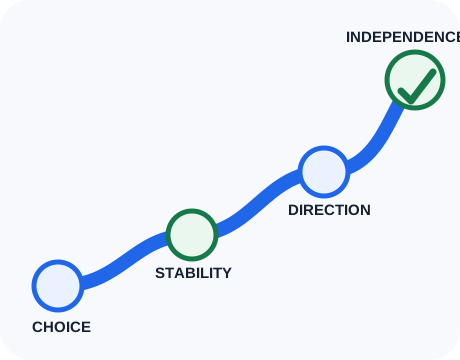
More support around the same simple idea.
We work toward stability first, then routine, direction and independent life. The programme is designed around respectful private conversations, lived-experience support and appropriate professional input.
People who understand the inside of dependency, working alongside qualified professionals.
Stop Dependencies is rooted in lived experience. That experience informs how we speak with people and how the programme is structured. Psychological, nutritional and medical matters are handled within the appropriate professional scope, with medical assessment or referral where needed.
Something worth returning to.
Recovery is not only about removing alcohol, drugs, nicotine or another dependency from a person’s life. It is also about helping a person rediscover what makes life worth protecting.
A good memory. A conversation that changes the direction of a day. Work that creates momentum. A relationship worth rebuilding. A place, interest or plan worth returning to.
Where those anchors already exist, we help the person reconnect with them. Where they do not, we work with the person to begin creating new ones.
Recovery should lead back into life.
Where appropriate for the individual, progression can mean returning to employment, entering education or training, rebuilding family and community life, or developing a viable path into self-employment. Contribution to society and the economy can be an outcome of restored independence — not a condition of a person's dignity.
Start with the dependency that is affecting life now.
Alcohol
Structured support with explicit medical-withdrawal boundaries.
Drugs
Recovery support built around decisions, structure and progression.
Nicotine
Interrupt repeated daily patterns one interval at a time.
Gambling
Rebuild control, practical stability and direction.
Compulsive pornography use
Private support for adults who want to change the behaviour.
A defined programme can move quickly.
We have identified a route to an approximately 300 m² Dublin programme environment and can also assess suitable premises offered by a commissioning organisation. For a defined and funded project, our target is mobilisation within 14 days where premises, insurance, safeguarding, staffing and professional requirements can be satisfied.
Discuss a cohort, referral pathway or programme requirement.
We welcome conversations with public bodies, community organisations, employers, referral partners and other organisations that are exploring structured recovery support in Dublin.
For organisations →